

Rust and Remembrance
The riverbank was overshadowed by a railway bridge. I stood under it and looked up at the rusted underside, marveling at human ingenuity over the course of time and how long this track had been hanging over this river.
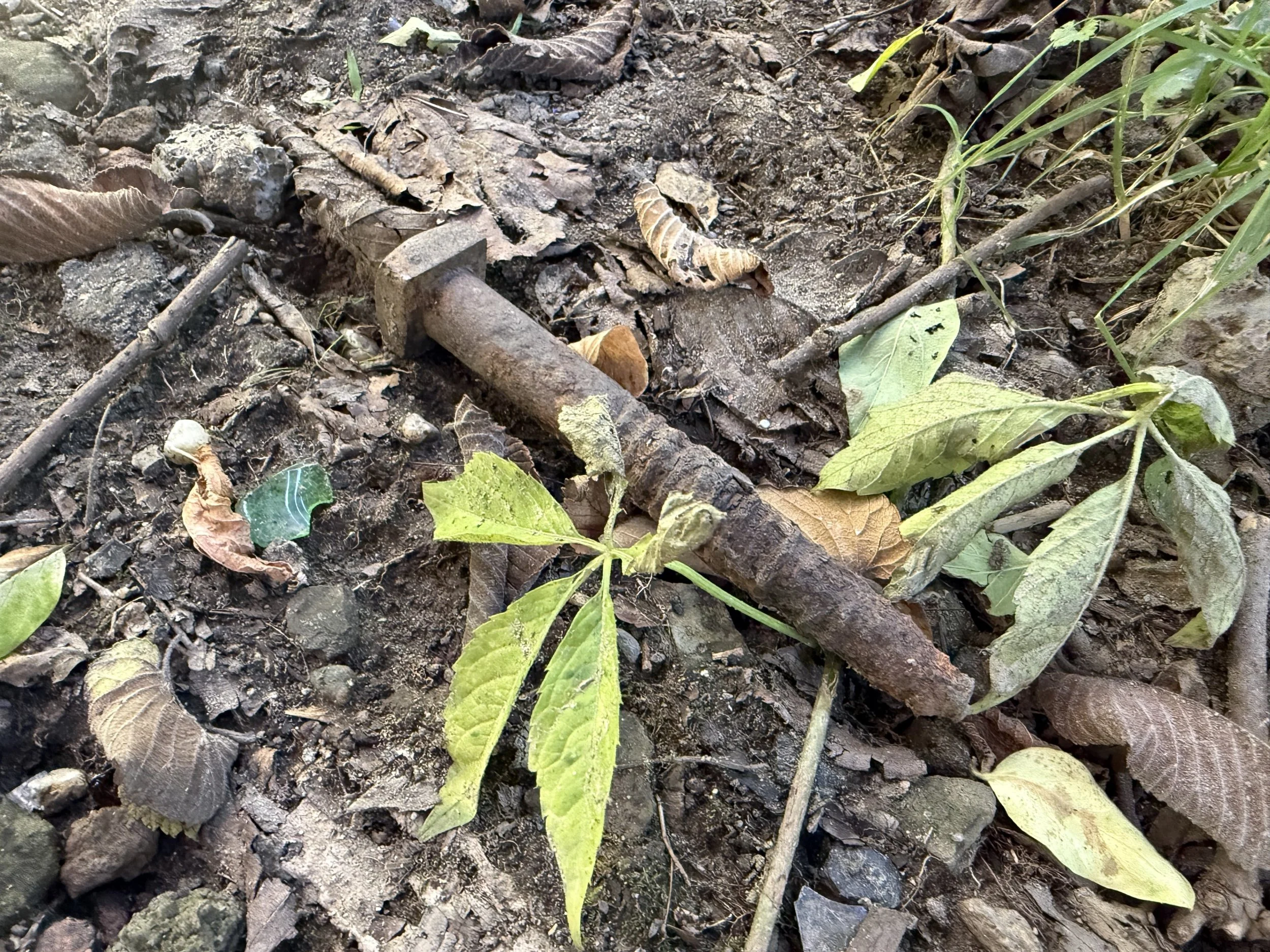
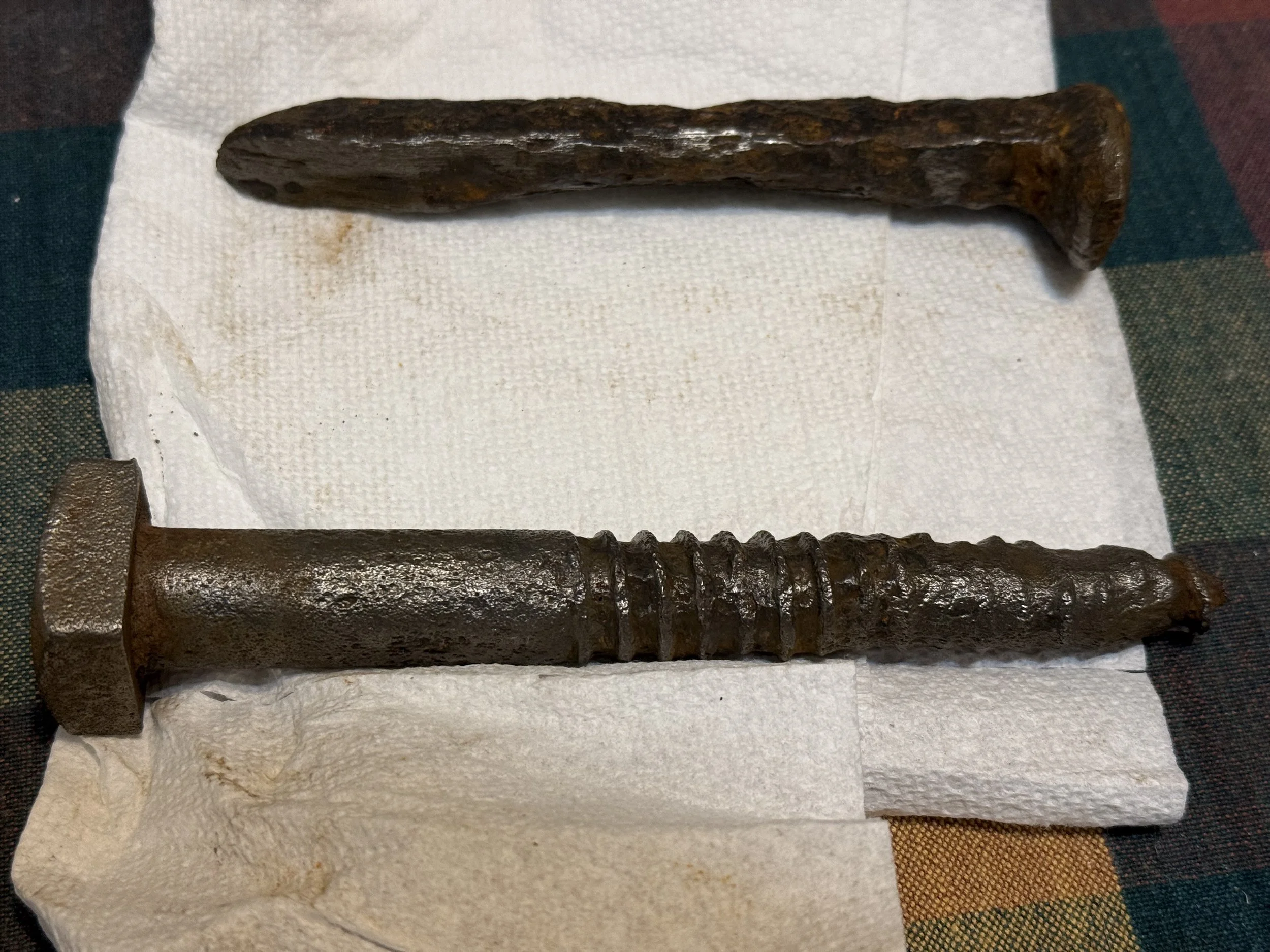
Then I looked down and saw some long objects lying on the ground: a railroad spike and a railroad screw, both thick, rusty, and crusted over with dirt. I picked them up.
I had biked down to the river from my aunt and uncle’s house, where I was staying for vacation this past week. I biked back to the house with those heavy pieces of metal in my pocket. My uncle put them in a plastic bin full of vinegar, telling me the rust would slough off after a few days of soaking.
That was Monday, Labor Day. That Friday, which was the 25th anniversary of 9/11, my uncle took them out and did some work on them with an electric wire brush and a hammer. Freshly de-rusted (for the most part, anyway), they came home with me on Saturday.
Rust is part of the decomposition of metal, like iron or steel, that happens when it’s left out in the elements and not protected and maintained. It’s a visible example of entropy, the state of all things moving in the direction of disorder if the process is not prevented with intentional care.
But if the rust is “knocked off,” as the saying goes, the metal can look somewhat like it originally did. In some cases, depending on what the metal originally was (like a blade), it can even be used for its intended purpose again. An old, unkempt thing made new while still retaining its age. Restored to a second life, even if that new life might look a bit different from the old one.
I spent a lot of time in the great outdoors this week, looking at trees, mountains, and bright countryside stars. Beyond finding those old pieces of railroad on my bicycle trip, I jogged, walked, hiked, picked apples at an orchard, and spent time staring at a campfire that I built and maintained with my own hands.
It felt good to be away from the digital rat race for a time (though I didn’t completely eschew technology). It felt good to find and do things outdoors in the countryside—a reminder that life is more than just staring at a screen. I even finished reading two novels! It was good to do activities that don’t require an internet connection or constant screen use. It helped me remember their benefits and be motivated to do them more. It helps me make sure those particular practices don’t become rusty.
The world is changing, moving at a rapid (and in my opinion, unsustainable) pace. We’re leaving many things we once held dear in the dust. In many cases, we’re forgetting things we promised we never would, or letting newfangled things of the future muddle our judgment.
But that doesn’t mean we can’t slow down and remember to cherish “things of old” that still have value, even if they’ve been cast aside for a time. I reminded myself this week that I don’t have to completely buy into the hurriedness and anxiety of the world I live in, even though it’s easy to do so. There are some things the world around me would love to see rust away. But I don’t have to let that happen in my own life, and I can set an example that others are welcome to follow. I can remember those things and keep them alive even when others think doing so is foolish.
“Never Forget” is a phrase that has often been used in reference to events like 9/11 and the Virginia Tech shooting that took place in 2007. But we are naturally forgetful creatures, so if we want to remember, we must do so intentionally. We must build remembrance and action upon it into our lifestyles.
I pray that as the world speeds forward like a bullet train on an electric railway, I’ll remember to regularly slow down on purpose, like I did this past week. I want to notice things I previously overlooked. I want to find a way to remember and value the past for what it has taught me—even as this train zooms forward to the next station.