

Goals Make History
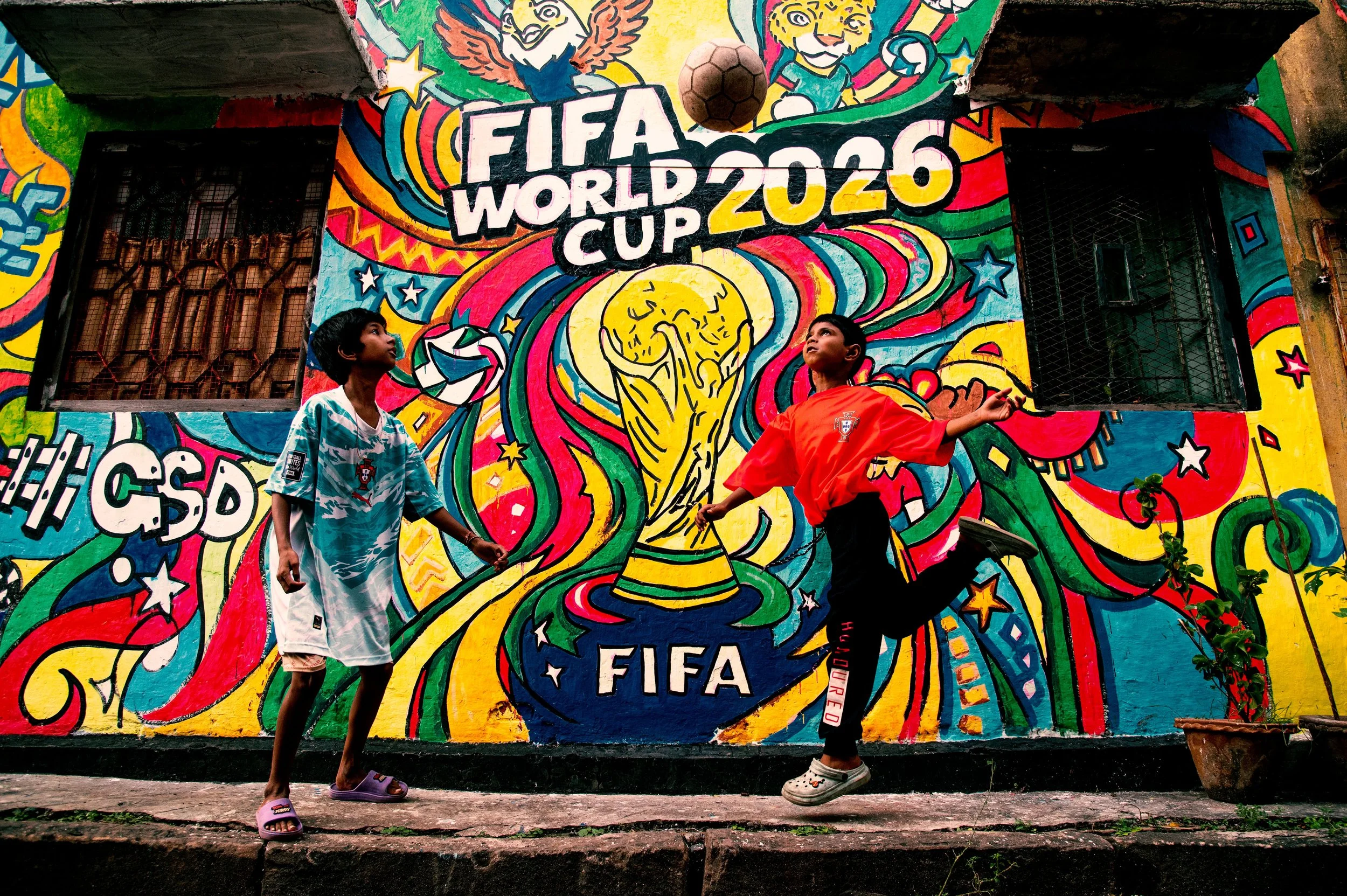
Photo by Anirban Das: https://www.pexels.com/photo/colorful-fifa-world-cup-2026-street-art-scene-38612669/
I played soccer throughout my elementary school years.
I enjoyed playing defense. It allowed me to participate without getting too tired. I often made jokes about the word “defense,” pretending my fellow defenders and I were standing at a fence shaped like a “d.” In one game, I also somehow scored a goal all the way from that position simply by kicking it so hard, it went right down the field and into the opposing team’s goal. I was a kid who wasn’t super interested in passing or sharing the ball; I mainly wanted to kick it as hard as possible.
Fast-forward to college, where I occasionally played a casual game of soccer with my friends. I was awful at it because I hadn’t practiced since elementary school, but I still enjoyed it.
Then, when I was in England doing a study abroad class called “The Sociology of Sport in the UK,” I got a chance to watch an evening soccer game played by two local clubs. And I got my first whiff of the hype surrounding this game outside the USA, where our American football is generally more celebrated than their football (I kind of want to call soccer “football” because that’s what most of the rest of the world calls it).
The chants in the stadium were loud and profane but strangely entertaining. The fans shouted the names of their favorite players, heckled others, and yelled at the referees. At one point, some fans got escorted off the pitch due to overly raucous behavior (or “behaviour,” since they were British). I was also amused to find out that alcohol could be consumed outside the stadium but not in the seats—unlike rugby games, which allowed the consumption of alcohol anywhere at any time.
A couple years later, I went on a mission trip to Guatemala and played soccer several times with village kids. A few years after that, I watched the Apple TV show Ted Lasso (the focus of which is a British soccer team) and was floored by how good the story was. Talking about it with friends and chatting about the different characters was exciting, partly because it was a “COVID comfort show”. Many have said Ted Lasso is like therapy in TV show form.
And now, 2026 is here, and the Soccer/Football World Cup just finished with a tense, bleed-into-overtime match between Argentina and Spain. A single goal scored in extra time by Spanish player Ferran Torres netted Spain the win. And the world went berserk.
I didn’t watch most of the games because I didn’t want to spend money on a TV package. But I watched what happened on the internet in response to the games. I didn’t know it was possible for Boston to run out of beer until the Scots arrived on our shores and drank the bars dry. Also memorable were Team Norway’s Viking-throwback “Row” performances and the meme-able Erling Haaland’s entertaining and intimidating playstyle.
Like the Olympics, the World Cup is a case study in what can happen on the global stage when people gather not to argue politics—though that did inevitably happen—but to enjoy watching a game played by elite athletes. It was especially powerful this year as conflicts have been boiling over across the globe with no hint of simmering down.
The weekslong, 100+ game event conjured up tons of excitement, partly because of how many countries participated and how integral to many cultures the sport is. This year, much of the celebration was concentrated on American soil because the USA played host.
So when the final match came, I signed up for a free TV trial to watch it live. I followed it up by going back a day and watching the very different—and in my opinion, more enjoyable—France vs. England bronze trophy/Golden Boot match.
As you can probably tell, I have a dormant but still smoldering appreciation for the game of soccer.
It’s also safe to say that I like soccer more than American football. A man named Henry Blaha once said, “Rugby is a beastly game played by gentlemen. Soccer is a gentleman's game played by beasts. Football is a beastly game played by beasts.”
Accurate or not, this statement rings true in how much more I enjoy the agile running on the field in soccer versus the constant bashing and brute force of American football.
I saw the difference writ large in the Golden Boot, Britain vs. France match, in which an astounding 10 goals were scored. This penultimate game was quite different from the finale: much less active violence and fouling took place than in the Argentina vs. Spain game. As some have said, the Golden Boot game was much more civilized than the final game was.
At the end of the day yesterday, one goal by a Spanish player who hadn’t yet scored in this year’s World Cup made all the difference. The 26-year-old Torres managed to beat “greatest of all time” 39-year-old Lionel Messi in number of goals scored in this match because Messi didn’t manage to make a single one.
Controversies surrounding the match aside (and there are plenty of them), it was nice to watch a game I appreciate and feel like I was a part of something huge. Media and entertainment surrounding the event emphasized global unity and individual/team accomplishment, just as happens at the Olympics.
Today, the media will inevitably go back to talking about global and “glocal” division. But when Spain took the trophy after playing their hearts out against Argentina’s almost-indomitable defense, it was a win for a many more people than just Team Spain.
A single ball in a net on Sunday made history. And the day before, Kylian Mbappé of Team UK took home a goals-scored record during the Golden Boot match.
Goals make history. And it makes me wonder: what goals might I be able to achieve personally that could do the same?